If the NHS is serious about shifting care to primary care, there are some uncomfortable conversations that need to happen. Here are three I keep seeing systems avoid:
1. Telling Hospitals They'll Be Doing Less
The NHS Confederation's recent analysis is stark: despite the strategic intention to shift spending from hospitals to community settings, care has moved in the opposite direction. Since 2006, the hospital share of NHS budgets has grown from 47% to 58%, while community services and public health have shrunk.
Yet someone still needs to sit down with acute trusts and say: "Over the next five years, you're going to be doing less of this work. We're planning for it. Here's how we'll support the transition."
Not "find efficiencies." Not "improve productivity." Actually doing less, with less resource.
I understand why this doesn't happen. Trusts push back hard because it threatens their finances and workforce. Local MPs start talking about "downgrading services." The public hears "cuts."
But without this conversation, systems just keep piling community services on top of unchanged hospital provision. The result? What the NHS Confederation calls "right drift" - the exact opposite of stated strategy.
2. Asking GPs "What Are You Going to Stop?"
Primary care can't just absorb more work. The 2025/26 planning guidance is already resulting in a 4% real-terms reduction for community services - even as they're meant to be taking on more.
Leaders need to ask practice teams directly: "If you're taking on complex chronic disease, more diagnostics, and acute care that used to go to hospital - what are you stopping?"
Same-day demand? Some prevention work? Particular admin tasks? Remember, with the increase in physicians' associates and other healthcare professions aimed at boosting capacity, GPs are now also having to do more and more supervision, whilst still seeing patients. And the patients they now get to see are largely more complex cases that can't be seen by less qualified staff, meaning even more pressure to deal with every 10 (or if they're lucky, 15) minutes
Every conversation I hear about investing in primary care focuses on what practices will gain. Almost nobody discusses what they'll let go of. So practices end up doing everything - all their old work plus the new stuff - until someone burns out or the practice closes.
The successful examples in the NHS Confederation report all had one thing in common: clarity about what would change, not just what would be added.
3. Being Honest That Things Will Get Messier First
Systems need to tell the public: "This transition is going to be bumpy. You'll notice services moving around. Access might feel harder while we rebuild capacity in different places. Some things you're used to will change."
Instead, transformation gets sold as if it'll improve things from week one. When it doesn't, people lose faith even faster.
The evidence on organizational change is clear - you get a performance dip during transitions. Leaders know this. But they keep pretending they can transform seamlessly while maintaining everything else. They can't.
The NHS Confederation found that successful left shifts measured their impact honestly - like North East London reducing gynaecology waits from 18 months to 12 weeks, even while explaining the service would look different.
Why These Conversations Get Avoided:
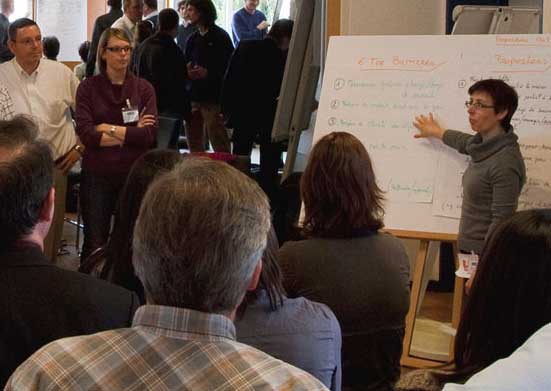
Because they're difficult. They create conflict. They need political courage. They require multiple parties to look systemically at how demand can be met. They force real choices instead of promising everyone everything. And they frequently require facilitation in order to be productive.
Dodging them doesn't make the problems go away. The NHS Confederation's research shows that without protected funding or investment standards for community services, the right drift will continue. We'll keep adding complexity without achieving transformation.
The systems making real progress aren't the ones with the slickest strategy slides. They're the ones actually having these conversations, even when it's awkward, and working through what comes next together.
So which conversation is your system avoiding? And what would it actually take to start?